Heart & blood vessels
Arteries, blood pressure, cholesterol
 Comprehensive Cardiovascular Optimization ProgramA TCA program
CARDIOMETABOLIC HEALTH
Most heart disease does not start in the heart. It builds over years from blood sugar, weight, cholesterol, and blood pressure problems that feed one another. Understanding that connection is the first step to changing it.
Dotted words explain themselves: hover over them or tap.
WHAT IT IS
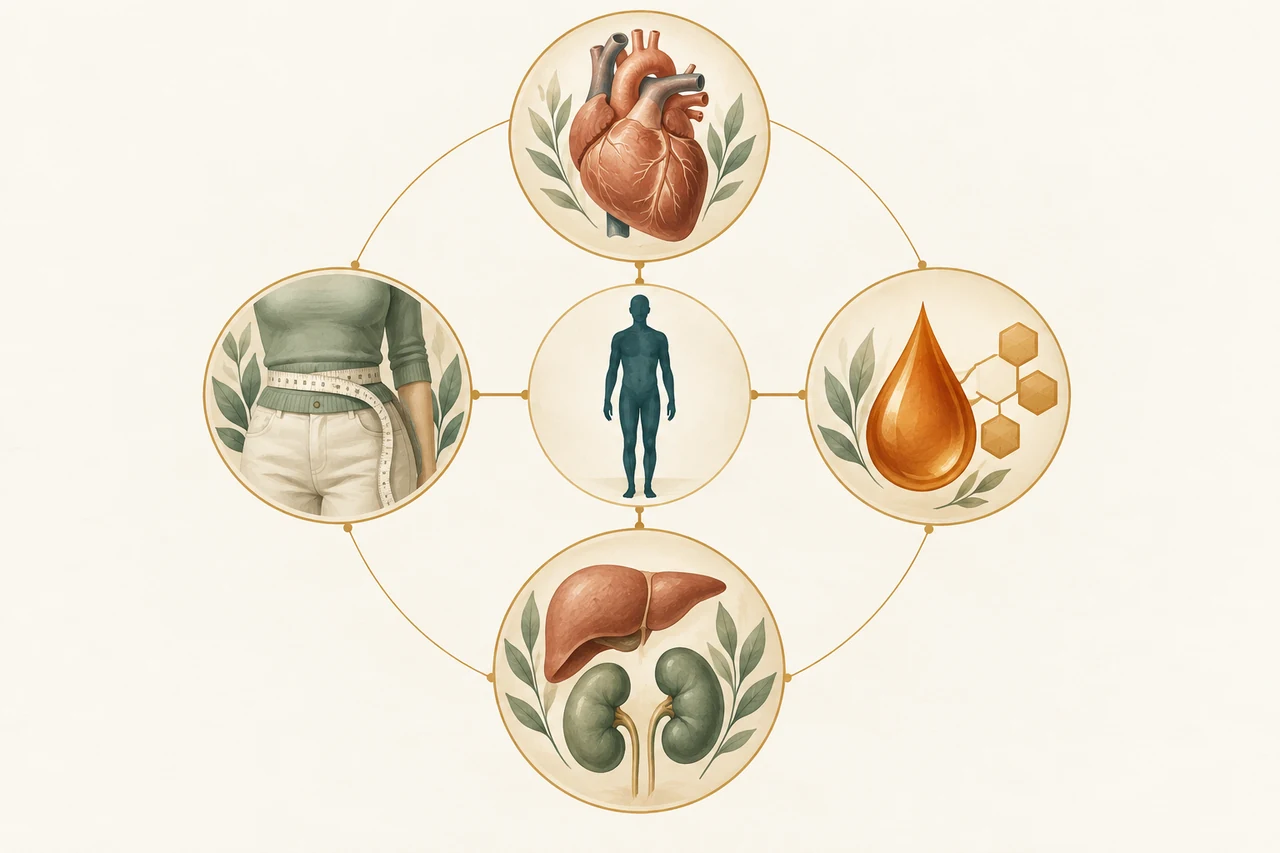
The heart, blood sugar, weight, kidneys, and liver work together. When one is out of balance, it can affect the others and raise your risk over time.
Arteries, blood pressure, cholesterol
Fat around the organs, inflammation, metabolism
Prediabetes, diabetes, insulin resistance
Filtering, fatty liver, fluid balance
Weight ↔ HeartInfluences inflammation and blood pressure
Heart ↔ Blood sugarAffects blood sugar, insulin, and blood vessel health
Weight ↔ Kidneys & liverChanges hormone levels, fluid balance, and metabolism
Blood sugar ↔ Kidneys & liverCan strain kidney and liver function
Cardiometabolic health looks at how the cardiovascular system, blood sugar regulation, body weight, and the kidneys and liver affect one another. Problems in one area can worsen the others, raising the risk of heart disease, stroke, diabetes, and kidney disease.
WHY IT MATTERS
Cardiometabolic problems rarely cause symptoms until damage is done. They are also among the most treatable causes of heart disease, which is why finding and addressing them early matters so much.
of U.S. adults have optimal cardiometabolic health.
Journal of the American College of Cardiology, 2022U.S. adults have at least one cardiovascular, kidney, or metabolic risk factor.
JAMA, 2024U.S. adults meet the criteria for metabolic syndrome.
National Health and Nutrition Examination SurveyPeople with diabetes are twice as likely to have heart disease or a stroke, often at a younger age.
Centers for Disease Control and PreventionHigh blood sugar, blood pressure, and cholesterol each injure the lining of the arteries. Together, the risk multiplies rather than simply adds up.
You can feel well with prediabetes, fatty liver, early kidney changes, or high triglycerides. Many people learn about them only after a heart attack or stroke.
Blood sugar, weight, cholesterol, and kidneys are often managed by different doctors at different visits. No one sees the whole picture.
Modest weight loss, regular activity, better sleep, and newer medications for diabetes and weight can improve several numbers at once and lower the risk of heart attack, stroke, and kidney decline in the right patients.
WHAT THE RESEARCH SHOWS
The case for treating cardiometabolic health rests on large, long-running studies and randomized trials. Taken together, they show benefits for both how long people live and how well they live.
How to read this evidence. Population studies show strong associations between cardiometabolic health and longer, healthier lives; randomized trials show that treating these risks changes outcomes. Neither can predict an individual result. Your cardiologist will discuss how the evidence applies to your history, risk, and goals.
THE NUMBERS TO KNOW
Having three or more of the first five is called metabolic syndrome, a strong signal of rising heart and diabetes risk. Your cardiologist will interpret your own results in context.
Fat around the waist reflects fat around the organs, the most harmful kind.
Or taking blood-pressure medication.
A blood fat that rises with insulin resistance.
Low levels of this protective cholesterol add risk.
Or taking medication for blood sugar.
HOW THE PROGRAM TREATS IT
The program’s four principles map directly onto the cardiometabolic picture, so each part of your plan supports the others.
Blood pressure, cholesterol, triglycerides, blood sugar, and kidney and liver markers, reviewed together, with medications chosen to protect the heart, including newer diabetes and weight medications when appropriate.
Regular movement improves how your body uses insulin, lowers blood pressure and triglycerides, and preserves muscle, which itself helps control blood sugar.
Reducing fat around the organs, even modestly, can improve several cardiometabolic numbers at once. Nutrition, behavior support, and medication are used when clinically appropriate.
Stress and poor sleep raise blood pressure and blood sugar and make healthy change harder. Sleep apnea, which is common with excess weight, is also considered.
CARDIOMETABOLIC TESTING
Your cardiologist builds a cardiometabolic picture from blood tests and the program’s included heart and vascular assessments. Bloodwork may be billed to your health insurance.
A1c and fasting glucose to find prediabetes or diabetes, and to track progress.
Cholesterol, triglycerides, ApoB, and Lp(a) when appropriate.
Kidney filtering (eGFR), urine protein, and liver tests that reveal early metabolic strain.
Included assessments such as an echocardiogram and exercise stress test show how metabolic risk is affecting the heart and your fitness. See them explained
NEXT STEP
The 2-minute Heart Check highlights which parts of your cardiometabolic picture may deserve attention. Private: nothing is stored or sent.